The Canary Islands: A Volcanic Archipelago on the World Map
Associated Articles: The Canary Islands: A Volcanic Archipelago on the World Map
Introduction
On this auspicious event, we’re delighted to delve into the intriguing subject associated to The Canary Islands: A Volcanic Archipelago on the World Map. Let’s weave attention-grabbing data and provide recent views to the readers.
Desk of Content material
The Canary Islands: A Volcanic Archipelago on the World Map
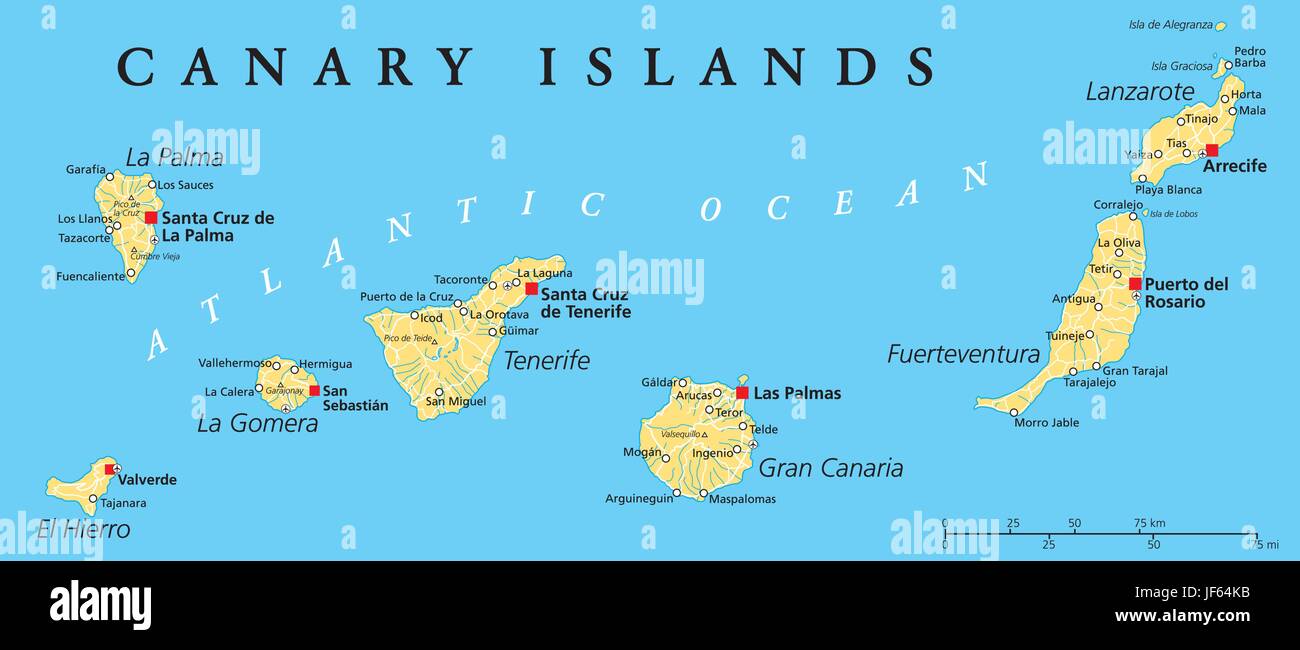
The Canary Islands, an autonomous group of Spain, are a charming archipelago nestled off the northwestern coast of Africa. Their strategic location, volcanic origins, and distinctive biodiversity make them a major characteristic on the world map, attracting thousands and thousands of vacationers and researchers alike. Understanding their geographical context inside the broader Atlantic Ocean and their relationship to the African and European continents is essential to appreciating their distinctive character.
Geographical Location and International Context:
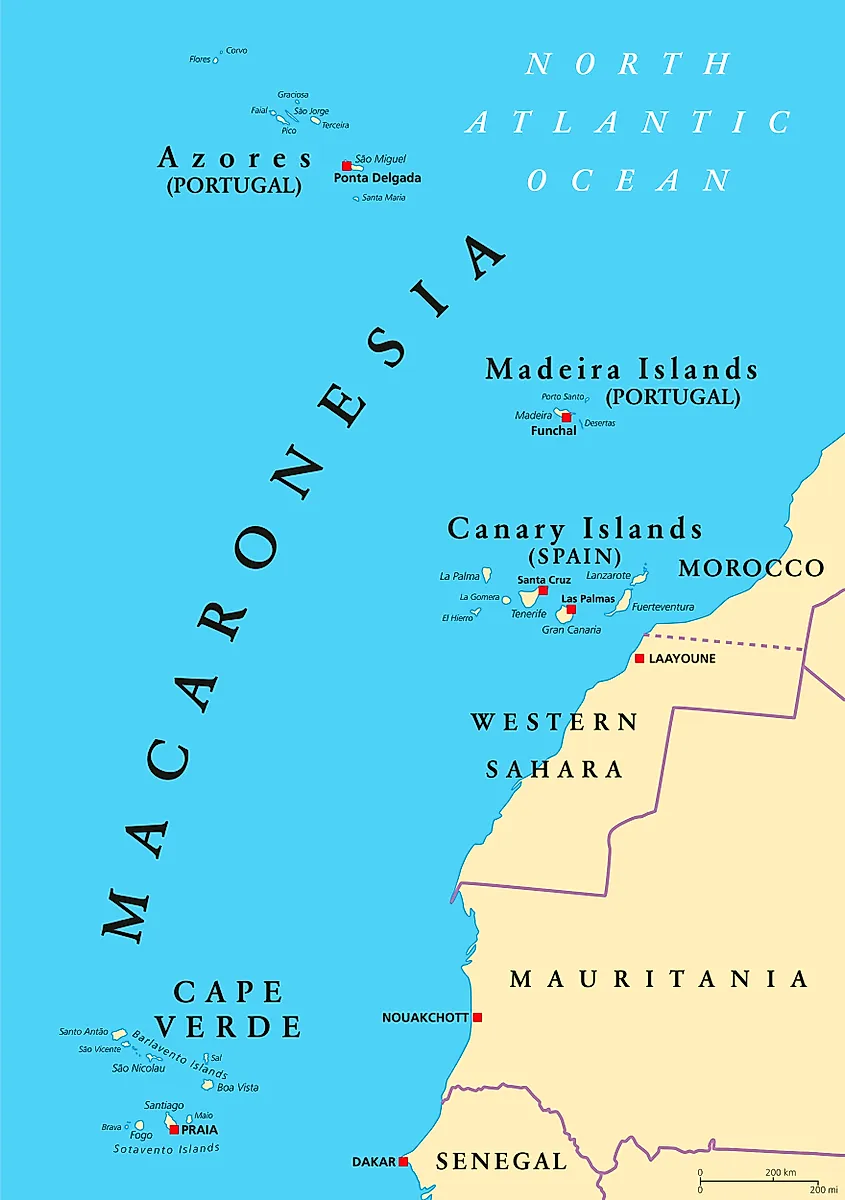
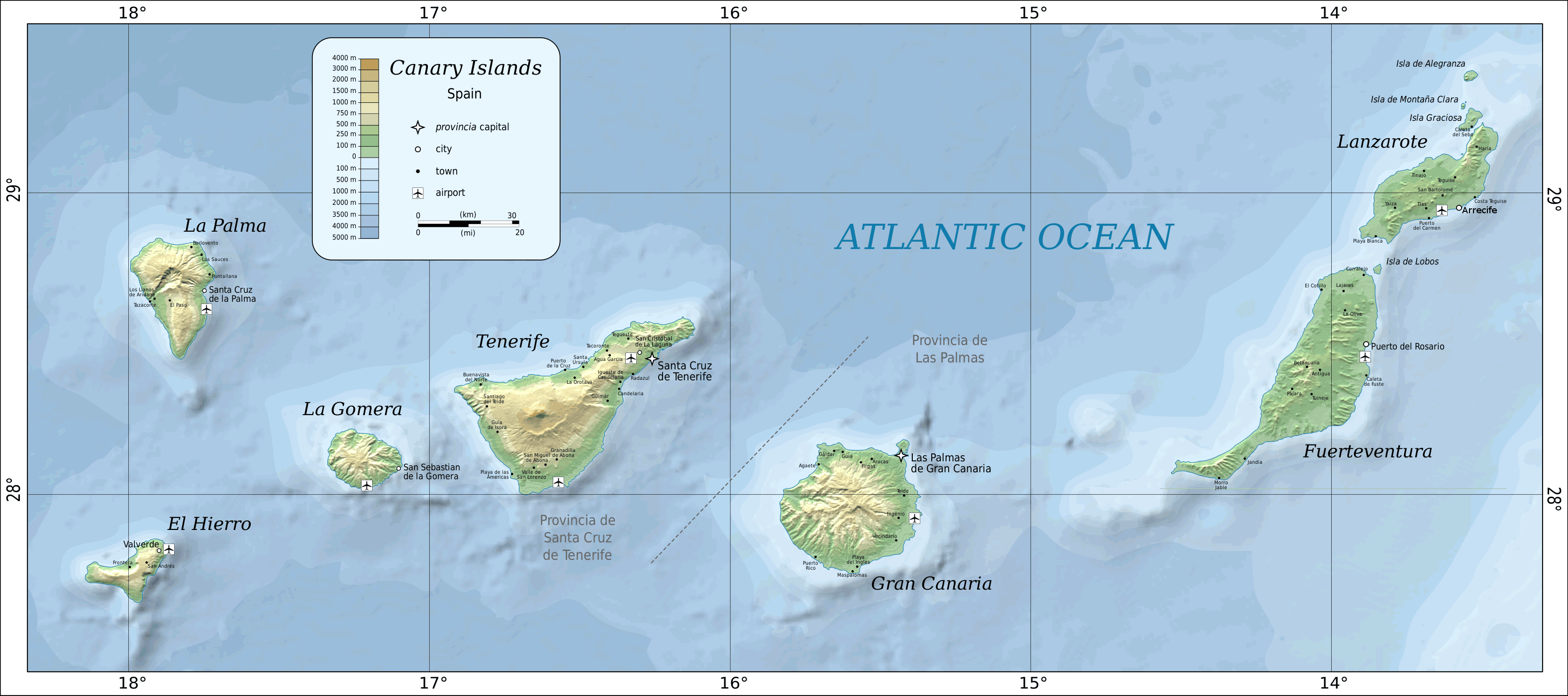
On a world map, the Canary Islands seem as a small however distinct cluster of islands, roughly 100 kilometers (62 miles) off the coast of Morocco. Their exact coordinates place them between 27° and 29° North latitude and 13° and 18° West longitude. This positioning locations them inside the subtropical zone, leading to a nice local weather characterised by heat temperatures and sunshine all through a lot of the 12 months.
Their proximity to Africa is critical, each geographically and traditionally. The islands’ volcanic origins are linked to the African tectonic plate, and their natural world present sturdy connections to the African continent. Nonetheless, their political and cultural ties are firmly with Spain, a European nation, reflecting a fancy historical past of colonization and subsequent integration. This distinctive mix of African and European influences is mirrored within the islands’ tradition, language, and structure.
The Canary Islands are located inside the North Atlantic Ocean, an unlimited expanse of water that performs a vital function in international climate patterns and ocean currents. The Gulf Stream, a heat ocean present originating within the Gulf of Mexico, flows previous the islands, moderating their local weather and contributing to their biodiversity. This strategic place additionally makes the islands vital for transport routes between Europe and the Americas, an element that has formed their financial improvement all through historical past.
The Islands: A Nearer Look:
The archipelago includes seven essential islands – Tenerife, Fuerteventura, Gran Canaria, Lanzarote, La Palma, La Gomera, and El Hierro – in addition to a number of smaller islets and rocks. Every island possesses a definite persona, formed by its distinctive geological options, local weather, and human historical past.
-
Tenerife: The most important island, Tenerife boasts the enduring Mount Teide, Spain’s highest peak and one of many world’s tallest volcanoes. Its various landscapes vary from volcanic deserts to lush laurel forests, attracting a variety of vacationers.
-
Fuerteventura: Identified for its in depth seashores and dramatic dunes, Fuerteventura affords a special form of magnificence, characterised by its arid panorama and robust winds. It is a standard vacation spot for windsurfing and kitesurfing.
-
Gran Canaria: This island affords a extra different panorama, encompassing mountains, seashores, and various ecosystems. Its capital, Las Palmas, is a significant port and a major city heart.
-
Lanzarote: Well-known for its volcanic landscapes and distinctive inventive heritage, Lanzarote is the work of artist César Manrique, who built-in the island’s volcanic options into his architectural designs.
-
La Palma: A haven for stargazers, La Palma boasts one of many world’s main astronomical observatories, benefiting from its clear night time skies and minimal gentle air pollution.
-
La Gomera: Identified for its lush forests and distinctive whistling language, La Gomera affords a extra tranquil and nature-focused expertise.
-
El Hierro: The smallest of the primary islands, El Hierro is a UNESCO Biosphere Reserve, famend for its pristine pure atmosphere and dedication to renewable power.
Every island’s distinctive traits are clearly seen on detailed maps of the Canary Islands. These maps usually spotlight the volcanic formations, coastal options, and concrete areas, offering a visible illustration of the archipelago’s various geography.
Volcanic Origins and Geological Significance:
The Canary Islands are of volcanic origin, shaped by the upwelling of magma from the Earth’s mantle. This volcanic exercise has formed the islands’ dramatic landscapes, creating towering peaks, volcanic craters, lava tubes, and distinctive geological formations. The islands are nonetheless volcanically lively, with latest eruptions on La Palma demonstrating the continuing geological processes that proceed to form the archipelago.
The volcanic rocks and soils of the Canary Islands are wealthy in minerals, contributing to the islands’ distinctive biodiversity. The volcanic exercise has additionally created various microclimates, permitting for a variety of plant and animal life to thrive. Finding out the geology of the Canary Islands offers useful insights into volcanic processes and the evolution of island ecosystems.
Biodiversity and Ecological Significance:
The Canary Islands are a biodiversity hotspot, possessing a outstanding array of endemic species discovered nowhere else on Earth. The islands’ isolation and various habitats have fostered the evolution of distinctive natural world, tailored to the particular circumstances of every island. Many of those species are threatened by habitat loss and human exercise, highlighting the significance of conservation efforts.
The islands’ distinctive ecosystems, together with laurel forests, volcanic deserts, and coastal habitats, present essential habitats for quite a lot of birds, reptiles, bugs, and vegetation. The Canary Islands are vital for migratory birds, offering resting and breeding grounds alongside their flight paths. Defending this biodiversity is essential not just for the islands’ ecological integrity but additionally for the worldwide preservation of distinctive species.
Cultural and Historic Significance:
The Canary Islands’ historical past is a wealthy tapestry woven from indigenous Guanches, Spanish colonization, and subsequent cultural influences. The Guanches, the unique inhabitants of the islands, left a legacy that continues to be studied and celebrated. Spanish colonization introduced vital modifications, shaping the islands’ language, tradition, and political constructions.
Over the centuries, the Canary Islands have change into a melting pot of cultures, reflecting their strategic location and historical past. This mix of influences is mirrored within the islands’ structure, delicacies, music, and traditions, creating a novel cultural identification. The islands’ historic websites, museums, and cultural occasions provide guests a glimpse into their fascinating previous.
Financial Significance and Tourism:
Tourism is the cornerstone of the Canary Islands’ financial system, attracting thousands and thousands of tourists yearly. The islands’ nice local weather, various landscapes, and wealthy cultural heritage make them a preferred vacation spot for each European and worldwide vacationers. The tourism sector offers employment for a good portion of the inhabitants and contributes considerably to the islands’ GDP.
Nonetheless, the fast progress of tourism additionally presents challenges, together with the necessity to stability financial improvement with environmental safety and the preservation of cultural heritage. Sustainable tourism practices have gotten more and more vital to make sure the long-term viability of the islands’ tourism business.
Conclusion:
The Canary Islands maintain a major place on the world map, representing a novel mix of geographical, geological, ecological, and cultural elements. Their volcanic origins, strategic location, and memorable biodiversity make them a captivating topic of research and a preferred vacationer vacation spot. Understanding their place on the world map is crucial to appreciating their distinctive character and the challenges and alternatives they face sooner or later. The islands’ future hinges on a fragile stability between financial improvement, environmental sustainability, and the preservation of their wealthy cultural heritage. Continued analysis, accountable tourism, and efficient conservation efforts are essential to making sure the Canary Islands stay a vibrant and thriving archipelago for generations to return.



Closure
Thus, we hope this text has offered useful insights into The Canary Islands: A Volcanic Archipelago on the World Map. We admire your consideration to our article. See you in our subsequent article!
